|
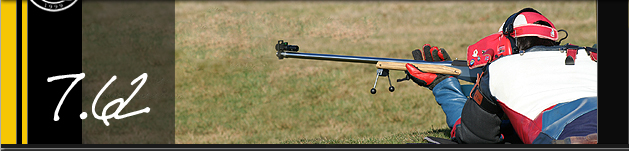
7.62mm or 'Fullbore' Target Rifle Shooting
Unlike
many other sports, target rifle shooting can be enjoyed by individuals
of all ages, gender and physical ability on equal terms. This means
that it is a sport that has great longevity for an individual and many
current international shots of the highest order are over 50 years old.
Fullbore rifle shooting can
be
enjoyed as either a team event, individual event or both. Although it
is possible to shoot a different competition every month in a different
country, Bisley Camp in Surrey England remains the 'Capital' of the target
shooting fraternity.
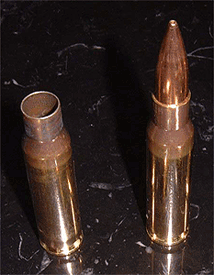
7.62mm is the
calibre, defined by the bullet (head not case) diameter being 7.62mm . As
far as Langar RC is concerned, this discipline is carried out on
gallery ranges all over the world incorporating both metric and
imperial distances (meters and yards) as well as metric and imperial
target faces (mm and inches), from 200 yards to 1100 yards .
|
 |
 |
A little bit of fullbore
history
The
National Rifle Association was founded in 1859, originally providing a
focus for marksmanship for the newly formed corps of volunteers which
had been raised to meet the perceived threat of invasion by the French.
The Association organised the first set of competitions on Wimbledon
Common in July 1860, on land where Earl Spencer and the Duke of
Cambridge, founders of the NRA, held manorial rights. Queen Victoria
fired the very first shot to open the meeting.
Although
shooting at this time was a very lucrative sport to get into thnaks
largely to the annual gift of £250 from Queen Victoria for the Queen's
Prize, it is now a sport that is merely carried out for fun, passion
and, if you are fortunate enough to get to shoot in the Commonwealth
Games, honour. However, shooters are proud when they shoot in the
Imperial Meeting (main event of the year in the UK) in the knowledge
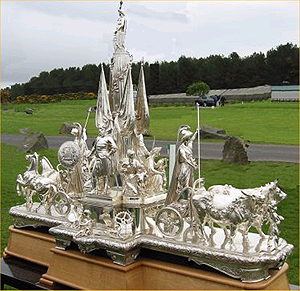
that the NRA boast one of the most elaborate and beautiful collections
of trophies in the world.
|
|
How
we do it?
As
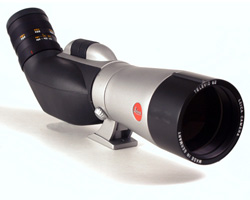
we shoot without a telescopic sight (we use iron sights made specific
to our sport), we obviously would struggle if we couldn't see where our
shots were falling, particularly from 1100 yards. This obviously
effects your 'group' and adjustments you must make. So we use a
spotting scope similar to the one pictured to see where our shots
have gone.
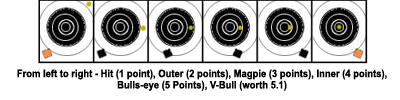
The targets
appear down the telescope eye piece as pictured on the banner for
'calendar', and as you might notice, there are large orange squares
situated on the base of the target. This depicts the score. As can bee
seen in the diagram below, the further right the marker board the
higher the score.
|
 |
|
|
What makes an excellent
shooter
You
may think this is an obvious question, but you might be surprised by
the answer. The winners every time are the ones who can read the
conditions on the range. Being able to shoot straight often as not is
simply not enough for you to win. There are numerous things a top class
shooter takes into account when about to shoot, during the shoot, and
waiting until the next shoot to ensure they come away with a winning
score.
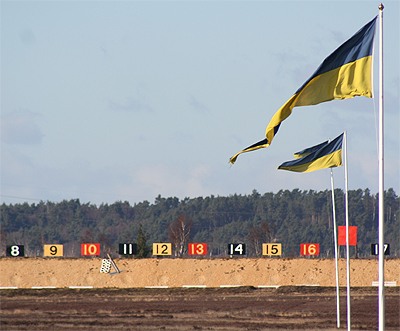
First and most importantly,
the
wind is the main factor which effects your shoot. Wind that is as
strong as can be seen on the picture on the left (note the steel
flagpoles are bending!) will move your shot a couple of targets along
if you do not adjust.
When taking wind
into account, direction, strength and steadiness are the key factors.
However, 'wind' can also be easier to read with the help of mirage.
This is the effect you get when you drive down a clear road on a hot
day and the road up ahead appears to have a running water effect
drifting over the road. This is merely heat being reflected off the
black surface and warming the moist air above it. We can see this down
the telescope and a good coach will understand how much they must
adjust on the sights in order to counter it.
|
|
There
are other effects that can disrupt a shooter from getting a decent
score such as rain, temperature and air pressure. However, this can be
quite detailed and can venture into the realms of ballistics, so we
shall leave it there.
|
|